
If you’ve started looking for a fluffy companion to add to your farm, you’ve likely seen a wide range of prices and descriptions. Some are called “Micro,” some “Mini,” and others “Mid-sized.” It can be overwhelming for a first-time buyer to know exactly what they are getting.
At Golden Mini Highland Ranch, we believe that education is the first step to successful ownership. Today, we’re breaking down the science and the standards behind the Miniature Highland to help you make an informed decision for your ranch.
1. It’s All About the Hip: The Height Standard
In the cattle world, we don’t use weight to determine “miniature” status; we use height. The industry standard is measured at the hip (hook bone) rather than the head.
Here is the general breakdown of size categories for Highlands:
- Standard Highlands: Usually stand over 48 inches at the hip. These are the traditional large cattle seen on big commercial ranches.
- Mid-Size Highlands: Usually fall between 43 and 48 inches. These are great for smaller farms but don’t quite fit the “mini” category.
- Miniature Highlands: To be classified as a true mini, the cow should be 42 inches or less at the hip once they reach three years of age.
- Micro-Highlands: These are the rarest and smallest, often standing 36 inches or less at the hip.
Why height matters: A shorter cow has a lower center of gravity and a smaller frame, which is exactly what makes them easier to manage on limited acreage.
2. The Science of the “Mini”: How They Are Bred
There is a common misconception that mini cows are “runted” versions of standard cows. In a professional breeding program like ours, this is not the case. Miniature Highlands are achieved through selective breeding over many generations.
We choose parents that naturally carry the smaller frame genetics while maintaining the health and “conformation” (body structure) of the breed. A true Mini Highland should look exactly like a standard Highland—just shrunk down. They should have:
- Square, sturdy bodies.
- Thick, healthy coats.
- Properly aligned legs and strong hooves.
3. The Importance of Pedigree and Registration
When you are investing in a Miniature Highland, the “paperwork” is more than just a piece of paper—it’s your insurance policy.
A Pedigree allows you to see the height and health history of the cow’s parents and grandparents. This is the only way to be reasonably sure that the “mini” calf you buy today won’t grow up to be a 50-inch standard cow tomorrow.
At Golden Mini Highland Ranch, we focus on bloodlines that prioritize:
- Docility: Ensuring the “mini” personality matches the “mini” size.
- Size Consistency: Tracking heights across generations to ensure our buyers get exactly what they pay for.
- Structural Soundness: Ensuring the smaller frame can still comfortably support the weight of the cow and their iconic horns.
4. Addressing the “Micro” Trend
You may see “Micro-Highlands” advertised for very high prices. While they are incredibly cute, it is important to ensure that the breeder has not sacrificed health for size. At our ranch, we believe in the “Sweet Spot”—the 38 to 42-inch range. This size maintains the rugged hardiness the breed is known for while still being small enough to be handled easily.
5. Horns, Hair, and Heritage
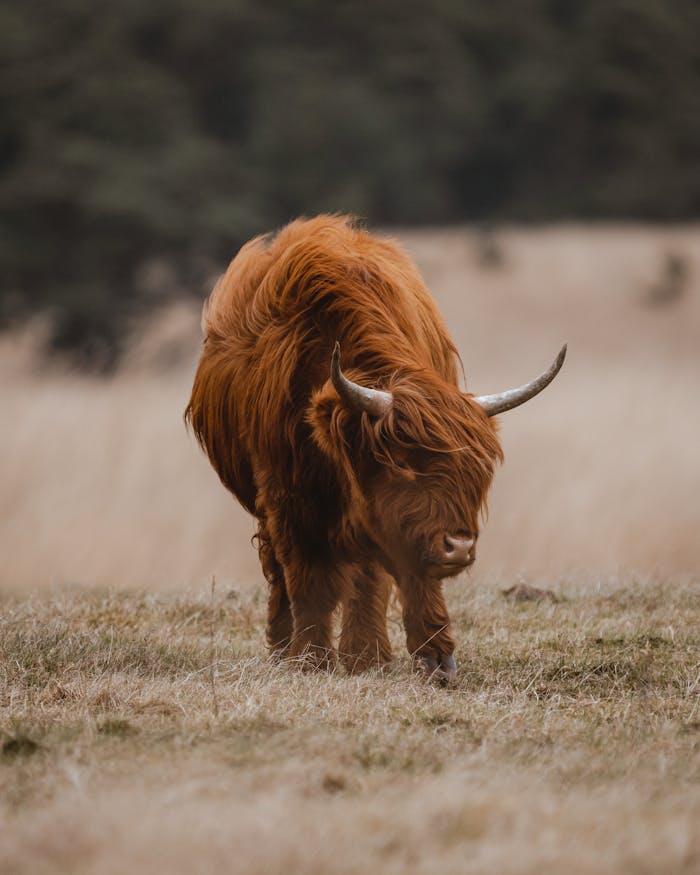
Does being a “Mini” change their look? Not at all! A true Mini Highland still grows the magnificent sweeping horns and the thick, double-layered “dossan” (the hair over their eyes). In fact, because they are closer to the ground, their long coats often look even more dramatic and “fluffy” than their larger relatives.